The Role of Visualization in Chess Training
 Swayven
Visualization in chess is defined as the ability to mentally simulate board positions and calculate move sequences without touching or looking at physical pieces. This skill sits at the center of every calculation, tactical decision, and long-term plan a player makes. The role of visualization in chess training is not a soft skill or a bonus. It is the cognitive engine that separates players who guess from players who calculate. Strong visualization improves calculation depth, tactical accuracy, and endgame technique across all skill levels. Players who train it deliberately improve faster than those who rely on board experience alone.
How does visualization in chess training work for experts vs. novices?
Expert chess players process board positions in a fundamentally different way than beginners. Rather than scanning piece by piece, experts process positions holistically, recognizing meaningful patterns across the whole board at once. This is not a talent. It is a trained cognitive habit built through thousands of hours of pattern exposure.
The key mechanism behind this is chunking. Experts group pieces into familiar tactical motifs, pawn structures, and positional templates stored in long-term memory. When they look at a position, they do not see 16 individual pieces. They see a Sicilian Dragon structure, a weak back rank, or a knight outpost on d5. This chunking lets them hold far more information in working memory during calculation, which is why they calculate deeper with fewer errors.
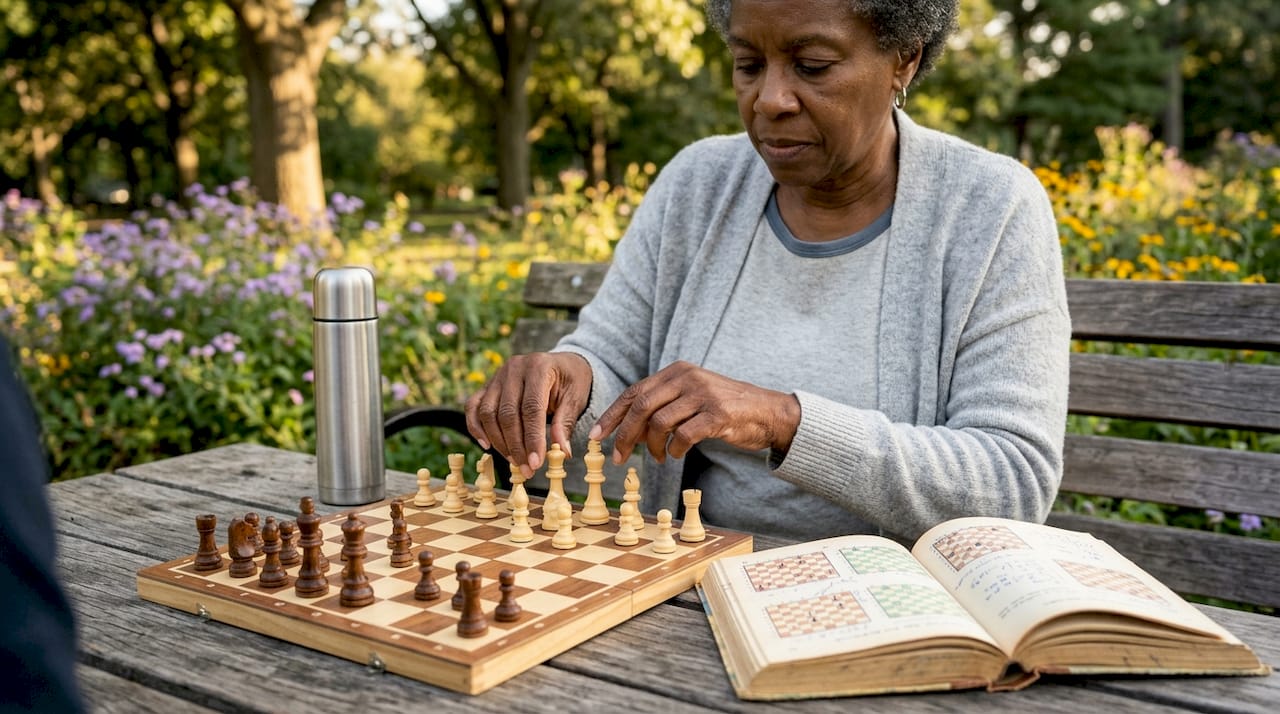
Novices, by contrast, suffer from what researchers call tunnel vision. They focus on individual pieces rather than structural relationships, which means they miss threats on the other side of the board. A beginner calculating a kingside attack often fails to notice a queenside counterplay threat that an expert would spot instantly. The expert’s holistic scan catches it before the calculation even begins.
The neuroscience behind this is clear. Expert players at ELO ratings between 1900 and 2700 avoid calculation errors that weaker players make routinely, precisely because chunking reduces the cognitive load of holding a position in mind. Less mental effort spent on remembering where pieces are means more mental bandwidth for evaluating consequences.
Pro Tip: When you study a new position, name the structural features out loud before calculating. Saying “isolated queen’s pawn, open d-file, bishop pair” forces your brain to chunk the position rather than scan it piece by piece.
What are the best progressive visualization training methods?
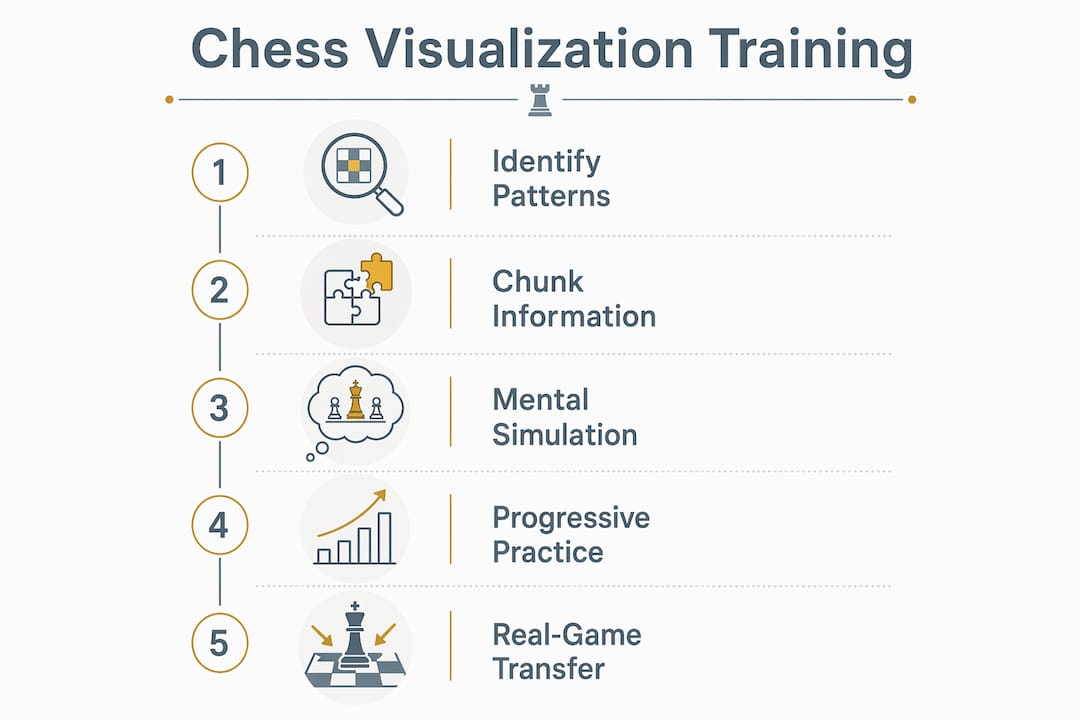
Visualization training must be progressive. Skipping foundational work and jumping straight to complex tactical drills leads to frustration and stalled improvement. The correct sequence builds from static skills to dynamic calculation.
Master board geometry first. Start by memorizing square colors, coordinate notation, and the movement patterns of each piece without a board in front of you. Quiz yourself: “What color is h7? What squares does a knight on e4 control?” This sounds basic, but players who skip this step struggle to hold positions mentally because they are uncertain about the board itself.
Practice single-move visualization. Take a position from a game or puzzle and visualize just one move ahead. Confirm it on the board. This builds the habit of forming a clear mental image before acting.
Advance to two and three-move lines. Once single moves feel solid, extend to two-move sequences, then three. Use tactical puzzles with the solution hidden. Commit to a full mental calculation before checking. Most players reach their first significant milestone within 2–3 weeks of daily 15-minute practice, with a second jump at weeks 5–6 as multi-move calculation stabilizes.
Introduce blindfold practice. Set up a position, close your eyes or turn away from the board, and try to hold the position mentally while calculating a line. Blindfold training strengthens the mental resources needed for calculation and planning, and it transfers directly to sighted play.
Review critical positions after games. After each game, pick two or three key moments and reconstruct them mentally before looking at the board. Comparing your mental reconstruction to the actual position reveals exactly where your visualization breaks down. This “drift detection” method is one of the most targeted feedback tools available.
Pro Tip: Keep your daily visualization sessions to 15 minutes of focused work rather than 60 minutes of distracted practice. Consistent short sessions build the mental habit faster than occasional long ones.
What are the most common visualization challenges?
Most players hit the same walls when training mental imagery in chess. Recognizing these obstacles is the first step to getting past them.
The photographic memory myth. Many players believe strong visualization means holding a perfect picture of the board in their head. This is wrong. Experts do not rely on photographic memory. They retrieve stored patterns rapidly. Beginners who try to memorize a static image of the board burn out quickly because that is not how expert cognition works. Train pattern recognition, not image retention.
Visualization fatigue. Mental calculation is cognitively expensive. Players who push through fatigue make errors not because their visualization is weak, but because they have exceeded their mental endurance. Build endurance gradually. Treat it like physical training. Start with shorter sessions and extend duration over weeks.
Aphantasia. Some players cannot form mental images at all, a condition called aphantasia. This does not prevent strong chess. Players with aphantasia succeed by using verbal and structural encoding instead of imagery. Concepts like “pawn chain on d4-e5,” “open c-file,” or “rook battery” replace visual pictures. Visualization is a flexible cognitive skill, not a purely visual one.
Moving pieces too early. Touching or moving a piece during calculation shuts down the mental process. Experts advise players to “sit on your hands” and complete the full mental variation tree before making any physical move. Once a piece is touched, mental calculation effectively stops.
Tunnel vision during calculation. Players who focus too narrowly on one line miss defensive resources or counterattacks. Train yourself to scan the full board before committing to a candidate move. Ask: “What is my opponent’s best reply?” before evaluating your own idea.
How does visualization improve real-game performance?
Mental imagery training pays off most clearly during actual games, where the ability to calculate accurately under time pressure determines outcomes.
The most direct benefit is deeper candidate move evaluation. A player with strong visualization can calculate a four-move combination, hold the resulting position mentally, and evaluate it accurately before committing. A player with weak visualization has to guess or rely on intuition after two moves because the mental image collapses. The difference shows up in tactical accuracy and in avoiding blunders caused by miscalculation.
Visualization also improves threat anticipation. When you can hold your opponent’s position mentally and simulate their candidate moves, you spot threats before they materialize. This is the practical meaning of “prophylaxis” in chess. It is not a mysterious grandmaster skill. It is applied visualization.
The table below shows how visualization training maps to specific game improvements.
| Visualization skill | Game benefit |
|---|---|
| Multi-move calculation | Deeper and more accurate tactical combinations |
| Holistic board scanning | Earlier detection of opponent threats |
| Pattern chunking | Faster recognition of tactical motifs |
| Blindfold position holding | Stronger endgame technique and calculation |
| Post-game reconstruction | Targeted identification of calculation errors |
Maintaining visualization sharpness requires consistent practice between games. A daily puzzle routine where you calculate the full solution before checking the answer is the most efficient maintenance method. Rookify’s daily puzzle review feature is built around exactly this habit, requiring players to commit to a mental solution before revealing the answer.
Our take on visualization and real training discipline
Most chess players I talk to treat visualization as something that will improve naturally with more game experience. It does not work that way. Game experience builds intuition. Visualization requires deliberate, uncomfortable mental effort that most players avoid because it feels harder than just playing another game.
The training mistake I see most often is players who study tactics by scanning puzzles quickly, checking the answer, and moving on. That approach builds pattern recognition at a surface level. It does not build the calculation depth that comes from sitting with a position, holding it mentally, and working through every branch before looking at the solution.
The players who improve fastest are the ones who treat visualization like a separate skill with its own practice routine. They spend time away from the board, reconstructing positions from memory, quizzing themselves on square colors, and doing blindfold exercises. That mental discipline transfers to the board in ways that extra game volume simply cannot replicate.
Balancing visualization work with physical board practice matters too. Pure blindfold training without board study can create gaps in positional understanding. The best approach combines both: use the board to build your pattern library, then use visualization drills to internalize those patterns so deeply that you can access them without looking.
How Rookify supports your visualization training
Chess players who want a structured path from basic board recognition to advanced calculation need more than puzzles and good intentions.
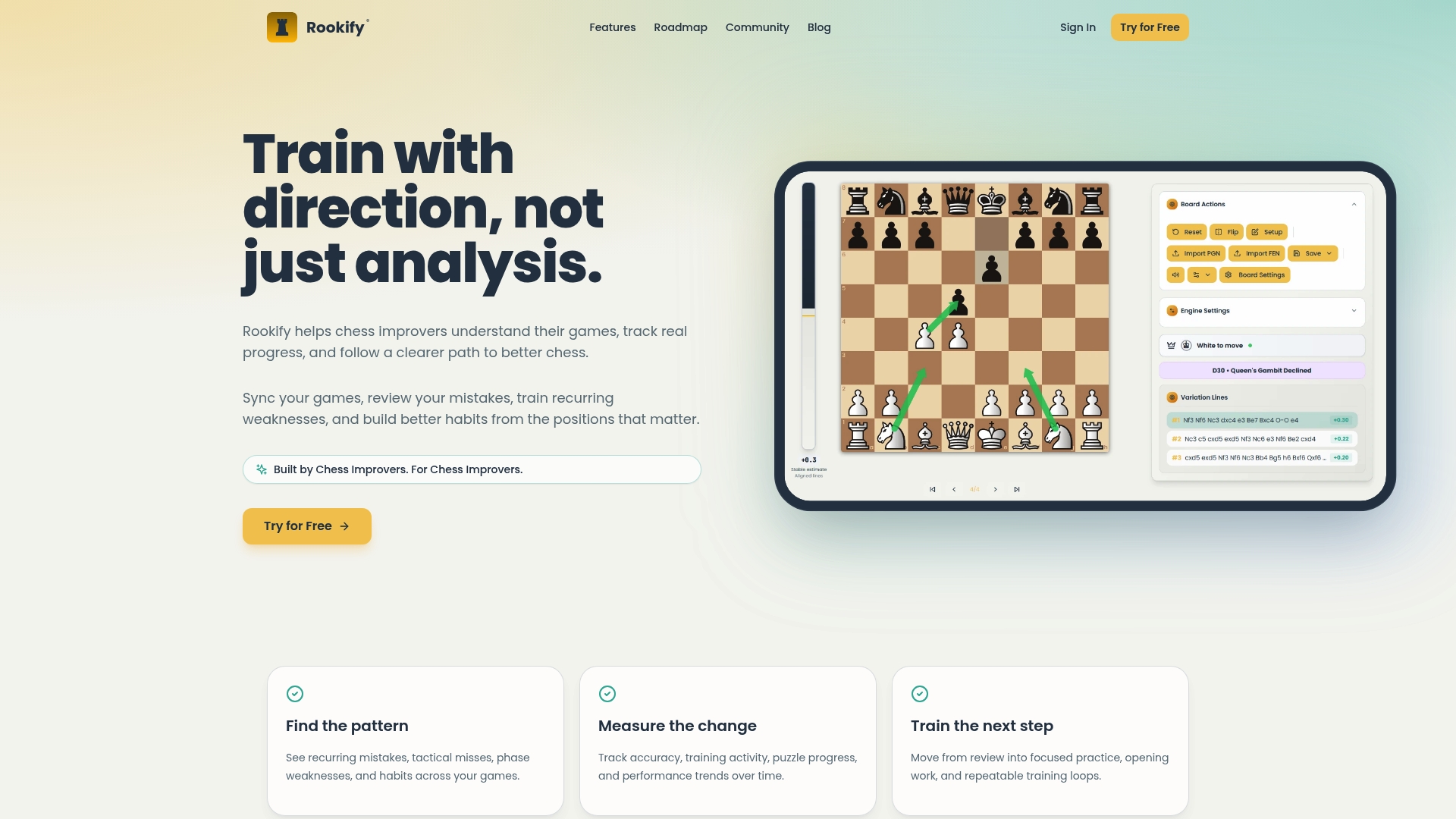
Rookify builds visualization training into a daily practice system that matches where you are right now. The platform syncs your games from your existing accounts, identifies the positions where your calculation broke down, and turns those moments into targeted training sessions. Instead of guessing what to work on, you practice the exact positions where your mental imagery failed. The daily puzzle review requires a committed mental solution before any answer is revealed, which directly trains the calculation discipline that separates improving players from stagnant ones. If you want a structured, progressive path to stronger visualization, Rookify gives you the tools to build it.
FAQ
What is chess visualization?
Chess visualization is the ability to mentally simulate board positions and calculate move sequences without physically moving pieces. It underpins every tactical calculation and strategic plan a player makes.
How long does it take to improve chess visualization?
Most players notice their first meaningful improvement within 2–3 weeks of daily 15-minute focused practice. A second, more significant jump in multi-move calculation typically occurs around weeks 5–6.
Do you need a photographic memory to visualize well in chess?
No. Strong players do not use photographic memory. They retrieve stored patterns rapidly, encoding positions through tactical motifs and structural relationships rather than static images.
Can players with aphantasia improve their chess visualization?
Yes. Players with aphantasia use verbal and structural encoding, describing pawn chains, file control, and piece relationships instead of forming mental images. Visualization is a cognitive skill, not a purely visual one.
What is the single best exercise to build chess visualization?
Reconstruct critical positions from your own games mentally after each game, then compare your reconstruction to the actual position. This drift detection method pinpoints exactly where your calculation breaks down.
Key takeaways
Visualization in chess is a trainable cognitive skill built through progressive, deliberate practice, not raw talent or photographic memory.
Point
Details
Experts chunk, not picture
Strong players retrieve stored patterns, not static images, which is why pattern study beats rote memorization.
Progressive training works
Start with board geometry, advance to multi-move lines, and add blindfold practice only after foundational skills are solid.
15 minutes daily is enough
Consistent short sessions build visualization faster than occasional long ones, with measurable gains by weeks 2–3.
Aphantasia is not a barrier
Verbal and structural encoding replaces mental imagery for players who cannot form visual pictures.
Post-game reconstruction targets weaknesses
Mentally rebuilding key positions after each game reveals exactly where calculation breaks down.